Report
Chinstrap penguin numbers fall 63% on island that held the largest colony
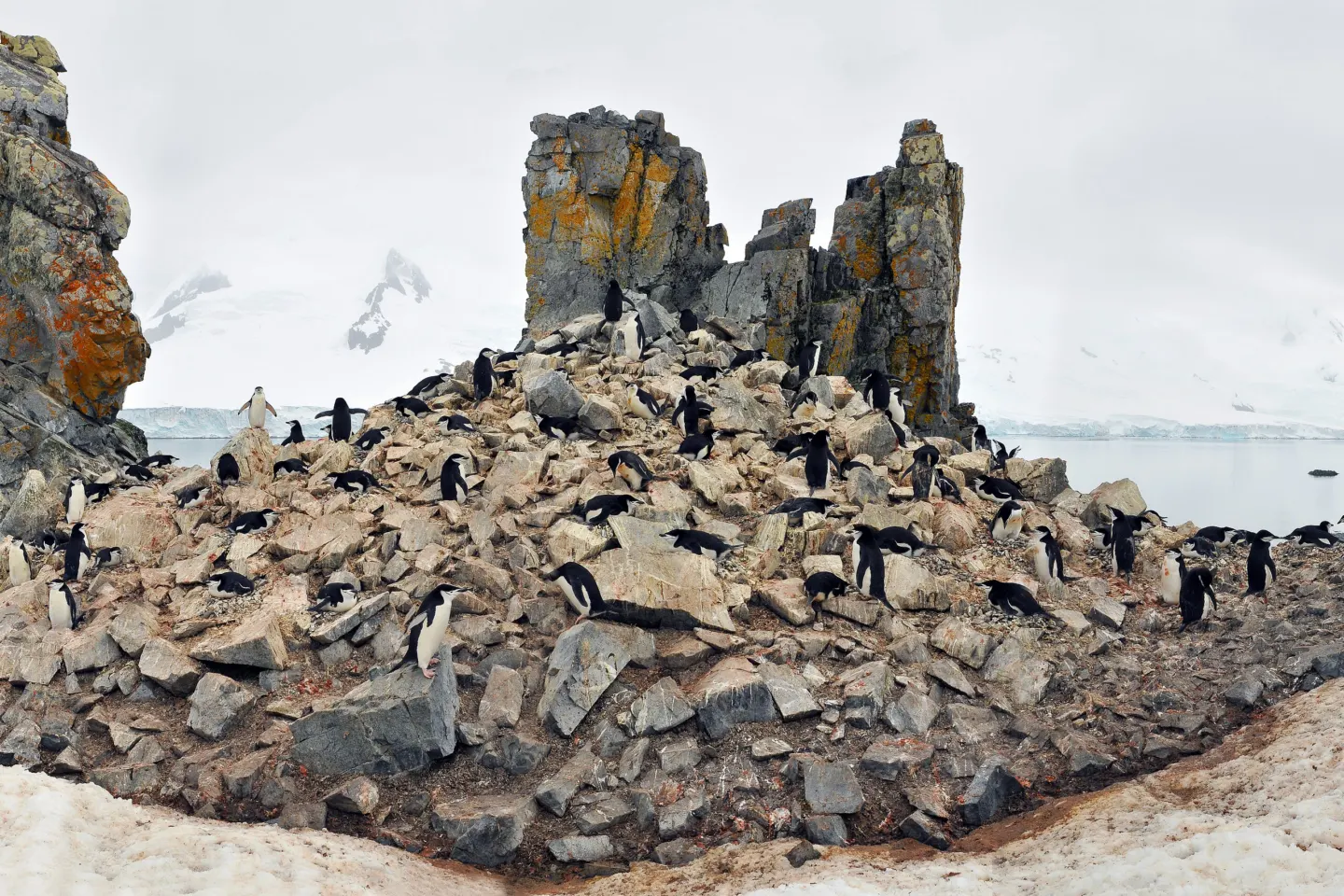
Surveys of Zavodovski Island in the South Atlantic found about 402,000 breeding chinstraps in 2025, down from 1.09 million in 2011. The researchers think warming seas have moved the birds' food.
- Event date
- Published
- Reading time
- 3 min
Key points
- Occupied chinstrap penguin nests on Zavodovski Island fell 63 per cent between 2011 and 2025, a British Antarctic Survey-led study found.
- Macaroni penguins on the same island increased and now outnumber chinstraps.
- The authors attribute the decline to warming seas shifting krill southwards; this is an inference, not a direct measurement.
- They recommend reclassifying chinstraps as endangered; the IUCN has not announced a decision.
Zavodovski Island, a small active volcano in the South Sandwich Islands, was described in 2011 as the site of the largest penguin colony in the world. A study published on 7 October 2026 in the journal Current Biology reports that it no longer is: the number of occupied chinstrap penguin nests there fell by 63 per cent between 2011 and 2025.
The research, led by Norman Ratcliffe of the British Antarctic Survey (BAS), the United Kingdom’s polar research institute, estimated that breeding chinstraps on the island dropped from about 1.09 million in January 2011 to 402,000 in 2025. That is a loss of more than 680,000 birds, at a rate of roughly 7 per cent a year.
“That’s a very rapid loss,” Ratcliffe told the news agency AFP.
How the count was made
The South Sandwich Islands are a UK overseas territory north of the Antarctic continent, and Zavodovski is hard to reach; BAS told the BBC it was “one of the most extreme places in the world to undertake fieldwork”. A team sailed for 15 days to get there. They surveyed the colonies with drones and aerial photography and fitted tracking devices to 20 birds, and compared the results with satellite imagery to follow how the area occupied by chinstrap colonies changed over time.
The decline was steady rather than sudden, which the authors used to test one obvious suspect. The island’s volcano, Mount Curry, had a major eruption in 2016. But the fall in chinstrap numbers began before the eruption and continued at the same rate afterwards, and the ash drifted away from the penguins’ nesting areas, according to the study as reported by CBS News and AFP. “We don’t think the volcano is implicated or it’s not the main driver,” Ratcliffe said.
A different fate for the neighbours
The island’s other penguin species moved in the opposite direction. Macaroni penguins increased from about 338,000 in 2011 to 433,000 in 2025 and now outnumber chinstraps there.
The researchers see the contrast as a clue. Chinstraps have a specialist diet of krill, small shrimp-like crustaceans, and prefer cooler waters. Macaronis eat a wider range of prey; the tracking data showed them foraging in warmer waters north-east of the island, where they were probably also taking fish and other crustaceans, the BBC reported.
“With waters warming, the krill have moved southwards,” Ratcliffe told the BBC. “Sea-ice cover to the south and a lack of suitable islands for nesting prevents chinstraps from following the food.”
The team also considered competition from migrating humpback whales, which eat large quantities of krill, and concluded that a climate-driven change in the ocean’s food supply was the more fundamental cause.
What the study can and cannot show
The counts are measurements. The cause is an inference. The paper calls a climate-induced shift in the marine ecosystem the “most plausible explanation” for the pattern, and Ratcliffe told AFP that climate change acting through food webs “is probably the main driver”.
Nor does it establish what has happened across the rest of the archipelago, which holds 38 per cent of the world’s chinstrap penguins. Surveys in 2011 had judged those populations stable; the authors say the Zavodovski result raises concern that they too have fallen.
On that basis the scientists suggest the species, currently classed as “least concern” on the Red List of the International Union for Conservation of Nature, should be reclassified as “endangered”. That is a recommendation; no decision by the IUCN has been reported.
Ratcliffe described the switch from chinstraps to macaronis as the “biggest change in community composition ever observed at a single location in Antarctica”, and said it was further evidence of how rapid warming is affecting the region’s ecosystems.
The title of largest penguin colony, the researchers said, now belongs to the Adélie penguins of Cape Adare in the Ross Sea, on the other side of the continent.
Sources
- World's largest penguin colony hit by 'alarming' decline in numbers
- Iconic penguin colony sees "population collapse" driven by climate change, study finds
Spotted an error? See how to request a correction.