From the archive Report
Hichilema wins a second term in Zambia as his rival rejects the count
The electoral commission gave the president 61.4% of the vote on 18 August 2026. Observers called polling day largely peaceful but criticised the conditions around it.
- Event date
- Published
- Reading time
- 2 min
Key points
- Hichilema was declared re-elected on 18 August 2026 with 61.4% of the vote, against about 38% for Brian Mundubile.
- Counting was briefly suspended after attacks on polling officials and the theft of ballot papers.
- EU observers said the vote was largely peaceful but that the playing field was distorted.
- A former minister was killed in a police raid linked to the opposition candidate on the night after the vote.
In the early hours of Tuesday 18 August 2026, after four days of counting, Zambia’s electoral commission declared President Hakainde Hichilema the winner of the presidential election, giving him a second five-year term without the need for a run-off.
Hichilema, 64, received 2,965,326 votes, or 61.4% of about 5 million cast in the 13 August poll, the Associated Press reported, citing the commission. His closest rival, Brian Mundubile, took 1,856,217 votes, about 38%. “I therefore declare, Hichilema Hakainde S, to be president-elect of the Republic of Zambia this 18th day of August, 2026,” said the commission’s chairperson, Mwangala Zaloumis. Five of the country’s 226 constituencies had still not been tallied when she spoke; she said the outstanding results were not expected to change the outcome materially.
A tense count
The count did not go smoothly. The commission suspended the count on the Friday after the vote and resumed it hours later under heavier security, saying that some polling-station officials had been attacked and some ballot papers stolen.
Overnight after the vote the authorities arrested 11 people, among them prominent opposition figures, in a raid on a property where Mundubile was present. The government said the operation was aimed at militia activity and that those detained had military-grade weapons intended for an armed insurrection. Mundubile gave a different account: he said armed personnel broke through the gate of his home with an armoured vehicle and opened fire, and he described the raid as an attack on his life. A former cabinet minister, Mutotwe Kafwaya, was shot and killed during the operation, the AFP news agency reported.
Mundubile, a 55-year-old lawyer and former minister standing for president for the first time, alleged that results recorded at polling stations did not match the figures announced as they were collated, and called for an independent investigation. Hichilema’s camp rejected the allegations.
What observers said
International observers, including a mission from the European Union, said the election was largely peaceful but that the wider process “took place in an environment that limited fundamental freedoms.” Michael McNamara, who led the EU mission, said: “Late legal changes, legal uncertainty, and unequal campaign conditions distorted the playing field.” Zambia’s Catholic bishops, in a pastoral statement, voiced concern about the deployment of the army during the count.
The vote was widely seen as a judgment on Hichilema’s handling of the economy. Zambia, Africa’s second-largest copper producer and a country of about 22 million people, defaulted on its debt in 2020. Hichilema, who won office in 2021 at his sixth attempt, oversaw the restructuring of that debt, brought inflation down and stabilised the currency. His opponent campaigned on the cost of living, arguing that the improvement in the national accounts had not reached ordinary households.
In a statement after the declaration, Hichilema thanked voters and addressed those who had not supported him. “To those citizens who preferred the ideas presented by our opponents, we hear you,” he said.
Every change of president in Zambia since the return of multiparty politics in 1991 has come through an election, and rights groups and observers said the dispute had damaged the country’s democratic reputation.
Update
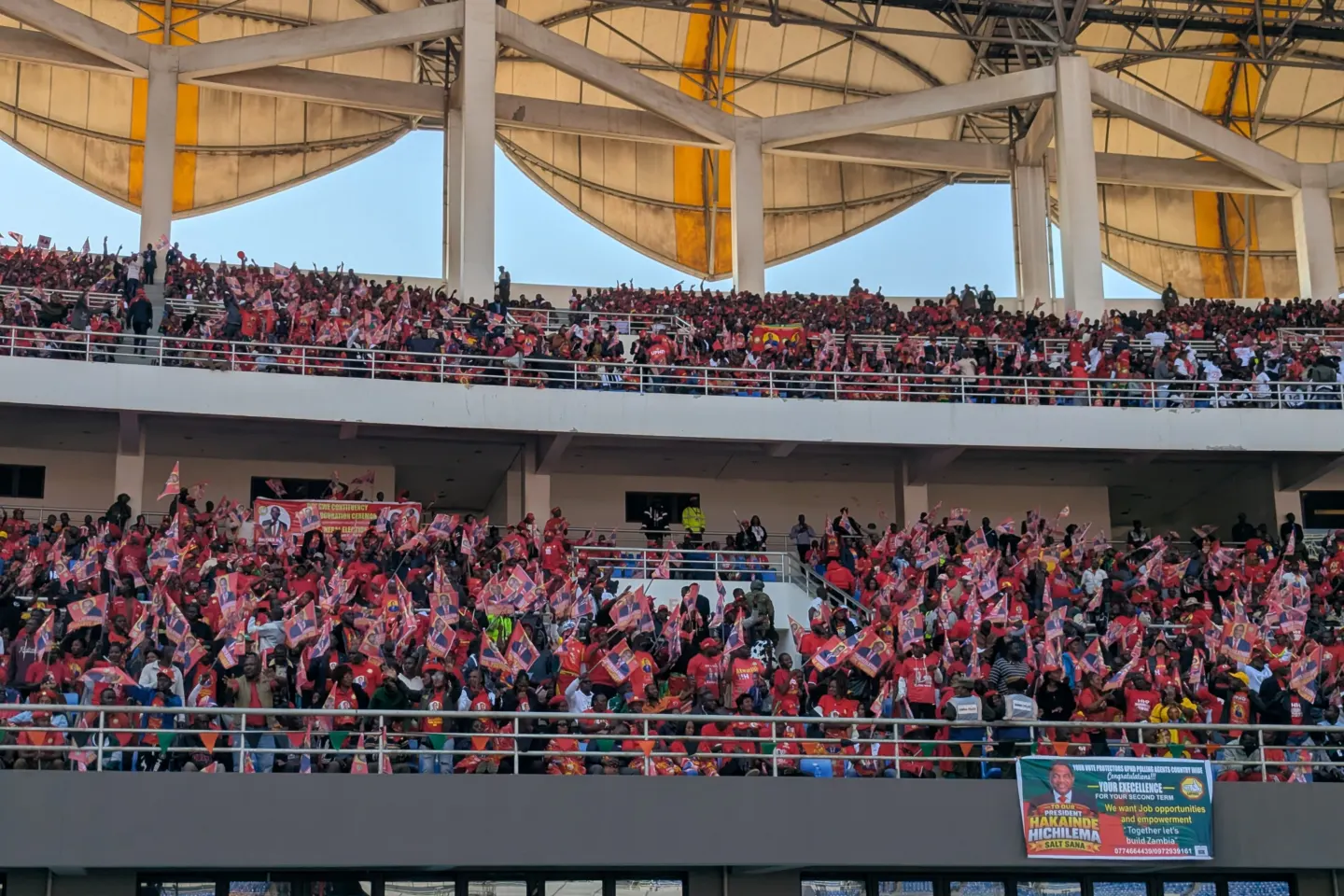
Mundubile did not file a legal challenge. Zambia's courts were closed on 24 August, the last day for lodging a petition, for what the authorities called “security reasons”; Human Rights Watch said the closure came “without credible explanation”. After two weeks in hiding, Mundubile surrendered to police on 27 August. He and his running mate, Makebi Zulu, were charged with treason on 29 August, their lawyer told Reuters; both deny wrongdoing. Hichilema was sworn in for his second term at the National Heroes Stadium in Lusaka on 1 September, telling those who had voted for other candidates: “We have heard you.”
Sources
- Zambia President Hichilema has been reelected for a second term
- Zambia's Hichilema wins second term amid opposition claims of electoral irregularities
- Zambia opposition leader held in treason probe: police
- Zambian opposition leader Mundubile charged with treason, lawyer says
- Hakainde Hichilema sworn in as Zambia's president after disputed election
Spotted an error? See how to request a correction.