From the archive Report
Bayreuth stages Wagner’s Rienzi for the first time as the festival turns 150
The early opera, kept off the composer's own stage since 1876 and shadowed by its association with Hitler, opened the anniversary season's staged programme on 26 July 2026.
- Event date
- Published
- Reading time
- 3 min
Key points
- Rienzi, Wagner's third opera, had never been performed at the Bayreuth Festspielhaus before 26 July 2026.
- The anniversary season opened on 25 July with Beethoven's Ninth Symphony under Christian Thielemann.
- Nathalie Stutzmann conducted; Alexandra Szemerédy and Magdolna Parditka directed; Andreas Schager sang the title role.
- Budget pressure had earlier reduced the anniversary programme from eleven operas to seven.
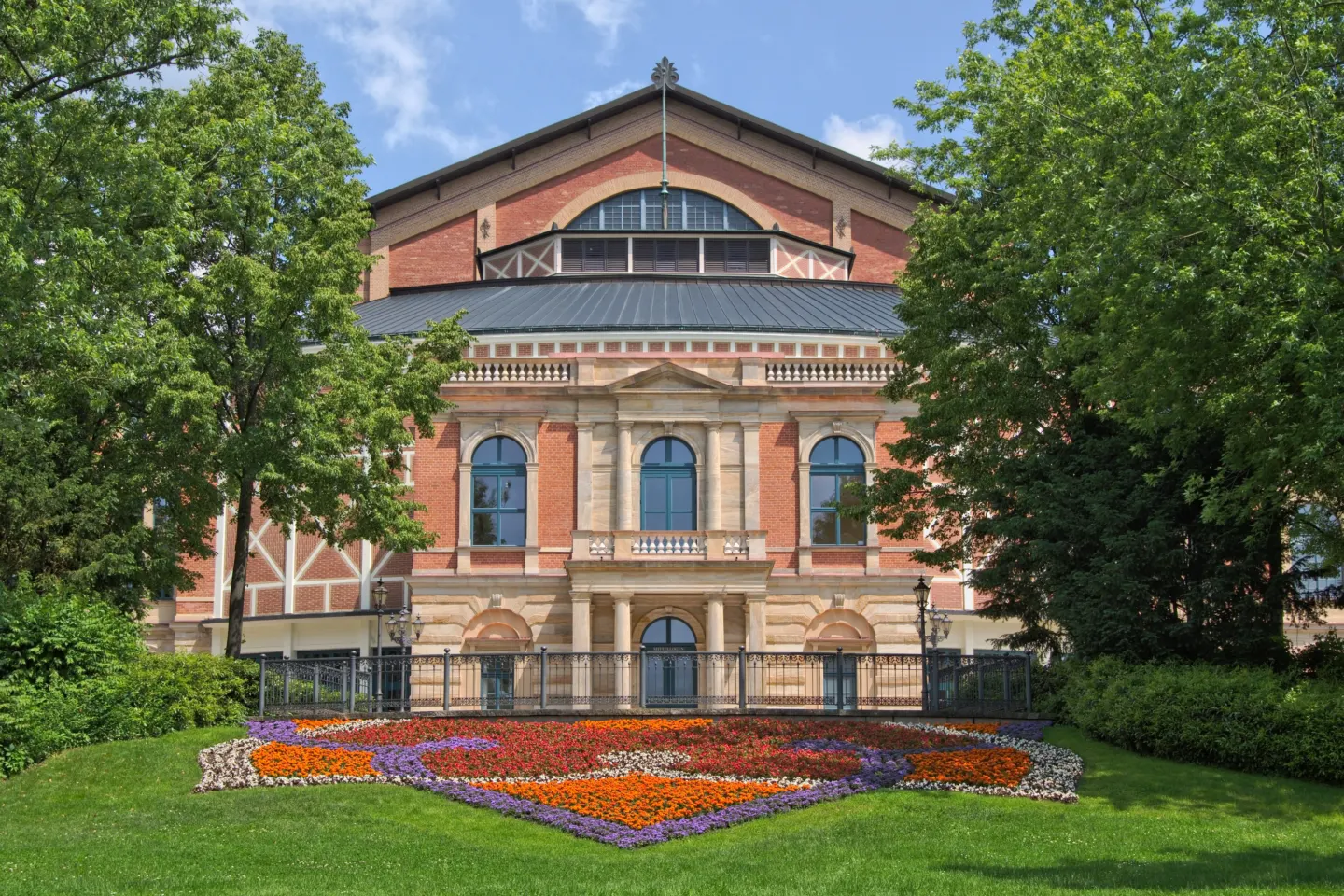
For a century and a half the Bayreuth Festival, the summer event Richard Wagner founded in the Bavarian town of Bayreuth to perform his own operas, kept to ten works. On 26 July 2026 it added an eleventh. Rienzi, der Letzte der Tribunen (Rienzi, the Last of the Tribunes), Wagner’s third opera, was performed in the Festspielhaus for the first time, as the opening production of the festival’s 150th anniversary season.
The season had begun the previous evening without an opera. On 25 July Christian Thielemann conducted Beethoven’s Ninth Symphony, the work with which Wagner marked the laying of the theatre’s foundation stone in 1872. The Spanish music magazine Scherzo reported that the speeches before the concert, given in the presence of the German chancellor, Friedrich Merz, touched on Adolf Hitler’s appropriation of Wagner’s work.
A work left outside the canon
Rienzi was first performed in Dresden on 20 October 1842. Modelled on French grand opera and based on a novel by Edward Bulwer-Lytton, it follows Cola di Rienzo, a 14th-century Roman tribune who is raised up by the people and then destroyed by them. Wagner did not include it among the works to be given at Bayreuth, and the festival’s repertoire has since consisted of the ten operas from The Flying Dutchman to Parsifal.
The opera carries a second burden. According to Scherzo, Adolf Hitler owned Wagner’s original manuscript, which was given to him as a birthday present, and the document disappeared in 1945; the orchestral materials used at the first performance were also lost. The version heard in Bayreuth was assembled from surviving sources under the dramaturg Markus Kiesel, taking as its basis the critical edition prepared in the 1970s by Reinhard Strohm and Egon Voss.
How far Hitler really identified with the opera’s hero is disputed. Reviewing the premiere for the German magazine Concerti, the critic Peter Krause wrote that the supposed identification may rest on Hitler’s own later self-staging. On the morning of the premiere, Krause reported, Michel Friedman gave the commemorative address at an event in the Festspielhaus titled “Verstummte Stimmen” (Silenced Voices). His message, as Krause summarised it, was that people who listen to the music of the antisemite Wagner need not do so with a bad conscience, but should do so with knowledge.
The production
The staging was directed by Alexandra Szemerédy and Magdolna Parditka, who also designed the sets and costumes. Nathalie Stutzmann conducted the Bayreuth Festival Orchestra and the festival chorus, prepared by Thomas Eitler-de Lint. The tenor Andreas Schager sang the title role, with Gabriela Scherer as Rienzi’s sister Irene, Jennifer Holloway in the trouser role of Adriano, Andreas Bauer Kanabas as Steffano Colonna and Michael Nagy as Paolo Orsini.
Reviewers described a production that moves medieval Rome to a present of concrete housing blocks, video screens, opinion polls and television broadcasts, in which Rienzi wins an election and declines into a populist demagogue. Concerti noted that the attack on the Roman Capitol is staged so as to recall the storming of the United States Capitol, without turning Rienzi into a portrait of any one politician.
Krause called the decision to perform the work “richtig und wichtig” – right and important – and singled out the musical performance. Scherzo’s reviewer, Manuel Nogales, described Schager as the evening’s outright winner and Holloway as its vocal revelation, and reported that the premiere ended with a quarter of an hour of applause and no booing. Concerti recorded the same warm reception for the singers, adding that the audience, unusually, did not applaud between scenes.
A slimmed-down anniversary
The festival’s director, Katharina Wagner, had originally promised all ten canonical operas plus Rienzi for the anniversary. The festival later cut the plan to seven works, citing rising costs: a new production of the four-part Ring of the Nibelung, The Flying Dutchman, Parsifal and Rienzi, according to the specialist site Opera Online, which quoted a festival press release.
Rienzi was scheduled for nine performances, Scherzo reported. The premiere was streamed by Deutsche Grammophon’s STAGE+ service, which said it held exclusive rights outside Germany, Austria and Switzerland. Nogales wrote that the response had fed a debate about whether the opera should now join the festival’s regular repertoire; no such decision had been announced.
Sources
- Opern-Kritik: Bayreuther Festspiele – Rienzi
- BAYREUTH / 'Rienzi' hace temblar los límites del Festival de Bayreuth
- Bayreuth Festival 2026: Rienzi Makes Its Historic Premiere on the Green Hill
- Bayreuth Festival 2026: seven operas instead of eleven for the 150th anniversary
- Richard Wagner, Rienzi – Bayreuther Festspiele, 26. Juli 2026
- Bayreuth Festival 2026 — 150 Years of Wagner on the Green Hill
Spotted an error? See how to request a correction.