From the archive Explainer
UNESCO adds 25 World Heritage sites and gives three African countries their first
Meeting in Busan in July 2026, the World Heritage Committee listed sites from Normandy's D-Day beaches to Sarnath in India, and put six places on its danger list.
- Event date
- Published
- Reading time
- 4 min
Key points
- The World Heritage Committee inscribed 25 sites in Busan: 19 cultural, five natural and one mixed. The list now has 1,273 sites in 173 countries.
- Comoros, São Tomé and Príncipe and South Sudan received their first World Heritage sites.
- Six sites were added to the List of World Heritage in Danger, three of them newly inscribed on an emergency basis; Vienna's historic centre was removed from it.
- A strategy for small island developing states for 2026–2034 was adopted with a budget of US$13 million.
Twenty-five places joined UNESCO’s World Heritage List in July 2026, when the World Heritage Committee held its 48th session in Busan, South Korea. UNESCO announced the results on 28 July. The new entries bring the list to 1,273 sites in 173 countries, and for three African states – Comoros, São Tomé and Príncipe and South Sudan – they are the first inscriptions ever.
The committee also placed six sites on the List of World Heritage in Danger, took one off it, and adopted a nine-year strategy for small island states. According to UNESCO, every inscription at the session was adopted by consensus.
What was added
Of the 25 new properties, 19 are cultural, five are natural and one is mixed, meaning it was listed for both cultural and natural value. UNESCO’s official table of new properties gives the following names.
Cultural sites
- Aalto Works (Finland)
- Alamūt Castle and Related Fortifications (Iran)
- Amazonia Theaters (Brazil)
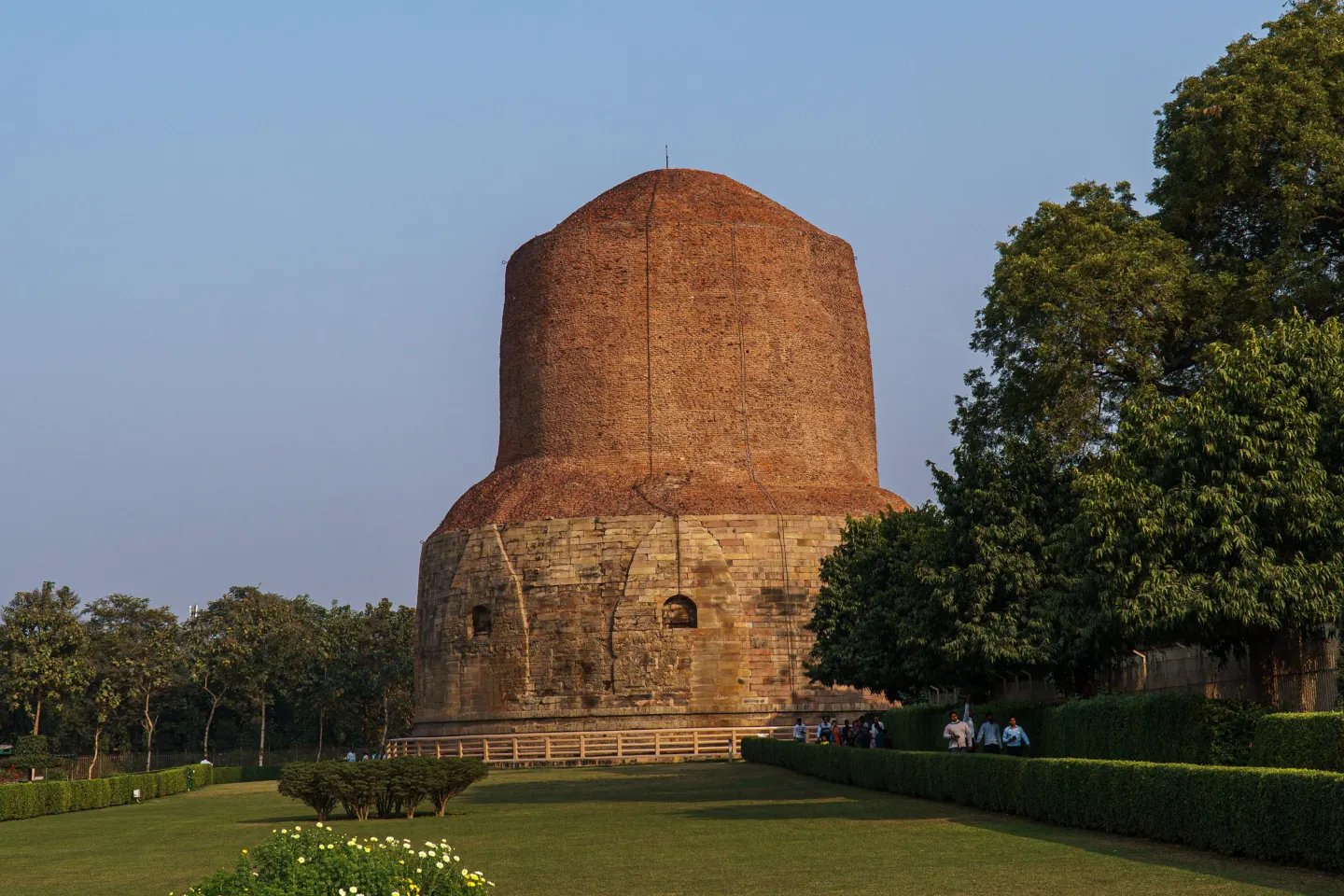
- Ancient Buddhist Site of Sarnath (India)
- Ancient Capitals of Asuka and Fujiwara (Japan)
- Beaches of the D-Day Landings, Normandy, 1944 (France)
- Gdynia Modernist City Centre (Poland)
- Jingdezhen Handicraft Porcelain Industry Sites (China)
- Mount Amel Castles (Lebanon)
- Rock Mosques and Associated Sacred Sites of Mangystau (Kazakhstan)
- Royal Capetian Fortresses of Languedoc (France)
- Sebastia (State of Palestine)
- Tashkent Modernist Architecture. Modernity and Tradition in Central Asia (Uzbekistan)
- The Cemetery Complexes of the Xiongnu Nobility (Mongolia)
- The Medinas of the Historic Sultanates of the Comoros (Comoros)
- The Roças of São Tomé and Príncipe: Colonial Agricultural System and Forced Migration (São Tomé and Príncipe)
- The system of Italian-style condominio theatres of the 18th and 19th centuries in Central Italy (Italy)
- Village of Sidi Bou Saïd (Tunisia)
- Wat Phra Mahathat Woramahawihan, Nakhon Si Thammarat (Thailand)
Natural sites
- Aqaba Marine Reserve (Jordan)
- Boma–Badingilo Migratory Landscape (South Sudan)
- Okefenokee National Wildlife Refuge (United States)
- The Bony Fish Fossils of the Western Limfjord – Evolution and Climate Adaptation in the Earliest Eocene (Denmark)
- Wadi Wurayah (United Arab Emirates)
Mixed site
- The wider area of Mount Olympus (Greece)
Two existing listings were enlarged: the Berlin Modernism Housing Estates in Germany and, in the host country, the Getbol, Korean Tidal Flats, which were extended in a second phase. Garamba National Park in the Democratic Republic of the Congo, already on the list, was re-examined and renominated under additional criteria. UNESCO said the Normandy beaches were inscribed as a site of memory, honouring the remembrance of the Allied landings of 6 June 1944.
Three countries on the list for the first time
The first inscriptions for Comoros, São Tomé and Príncipe and South Sudan reduced the number of states that have ratified the World Heritage Convention but have no listed site from 26 to 23. The convention, adopted in 1972, has 196 States Parties. Two of the three newcomers, Comoros and São Tomé and Príncipe, are small island developing states, and UNESCO said the president of Comoros, Azali Assoumani, attended the session for his country’s inscription.
UNESCO linked the result to a strategy for Africa that the committee adopted in 2021. At that point, the organisation’s World Heritage Centre noted, twelve African countries had no property on the list; five years later the number had been cut in half.
In a statement published by the World Heritage Centre, Sarah Nyanath Elija Yong Kier of South Sudan’s Ministry of Culture, Museums and National Heritage said: “Through this inscription, South Sudan joins the family of World Heritage nations.”
Why six sites went on the danger list
Three of the new sites – Boma–Badingilo Migratory Landscape in South Sudan, Mount Amel Castles in Lebanon and Sebastia in the State of Palestine – were submitted on an emergency basis. All three were inscribed on the World Heritage List and the List of World Heritage in Danger at the same moment.
UNESCO said the use of the emergency mechanism for three sites in one session reflected “the growing number of heritage properties under threat in regions affected by conflict and instability”.
Three sites already on the main list were moved to the danger list as well: the Historic Inner City of Paramaribo in Suriname, the Ancient City of Tauric Chersonese and its Chora in Ukraine, and Tyre in Lebanon. Danger listing is not a sanction. According to UNESCO, it gives a site access to technical and financial assistance and stronger international support for conservation. The committee removed one property, the Historic Centre of Vienna in Austria, from the danger list.
A strategy for small island states
The session adopted the World Heritage Strategy for Small Island Developing States 2026–2034, backed by a budget of US$13 million. UNESCO said it is meant to help those states identify, protect and manage heritage sites while dealing with the particular pressure of climate change, and that it complements the existing strategy for Africa.
UNESCO’s director-general, Khaled El-Enany, said in the organisation’s press release that inscription “marks the start of a lasting commitment: to protect it, manage it effectively, and ensure that it benefits its communities”. He added that UNESCO would strengthen its support for the 23 states that still have no inscribed site.
What comes next
The newly inscribed properties, UNESCO said, now benefit from the highest level of international recognition and protection, and the committee went on to examine reports on the state of conservation of sites already listed. Its next session, in 2027, is due to be held in Istanbul, Türkiye.
Sources
- UNESCO World Heritage: 25 new sites inscribed
- New Inscribed Properties (48COM)
- Three New Countries Join the World Heritage List: A Major Milestone for Africa and SIDS
- UNESCO's World Heritage Committee concludes with renewed global commitments
Spotted an error? See how to request a correction.