From the archive Report
South African museum hands back remains of 84 Namibians held for a century
At a ceremony in Cape Town on 19 August 2026, Iziko Museums returned ancestral remains once used for racial pseudo-science, along with two Namibian prisoners who died on Robben Island.
- Event date
- Published
- Reading time
- 3 min
Key points
- South Africa returned the remains of 84 Namibians held in Iziko Museums' collections for more than 100 years.
- The remains of Festus Nehale and Simon Petrus Niilenge, Namibian political prisoners who died while held on Robben Island, were returned at the same ceremony.
- Iziko's council chair said the 84 had entered the museum as objects of race-based pseudo-scientific research.
- All 86 arrived in Namibia on 21 August 2026.
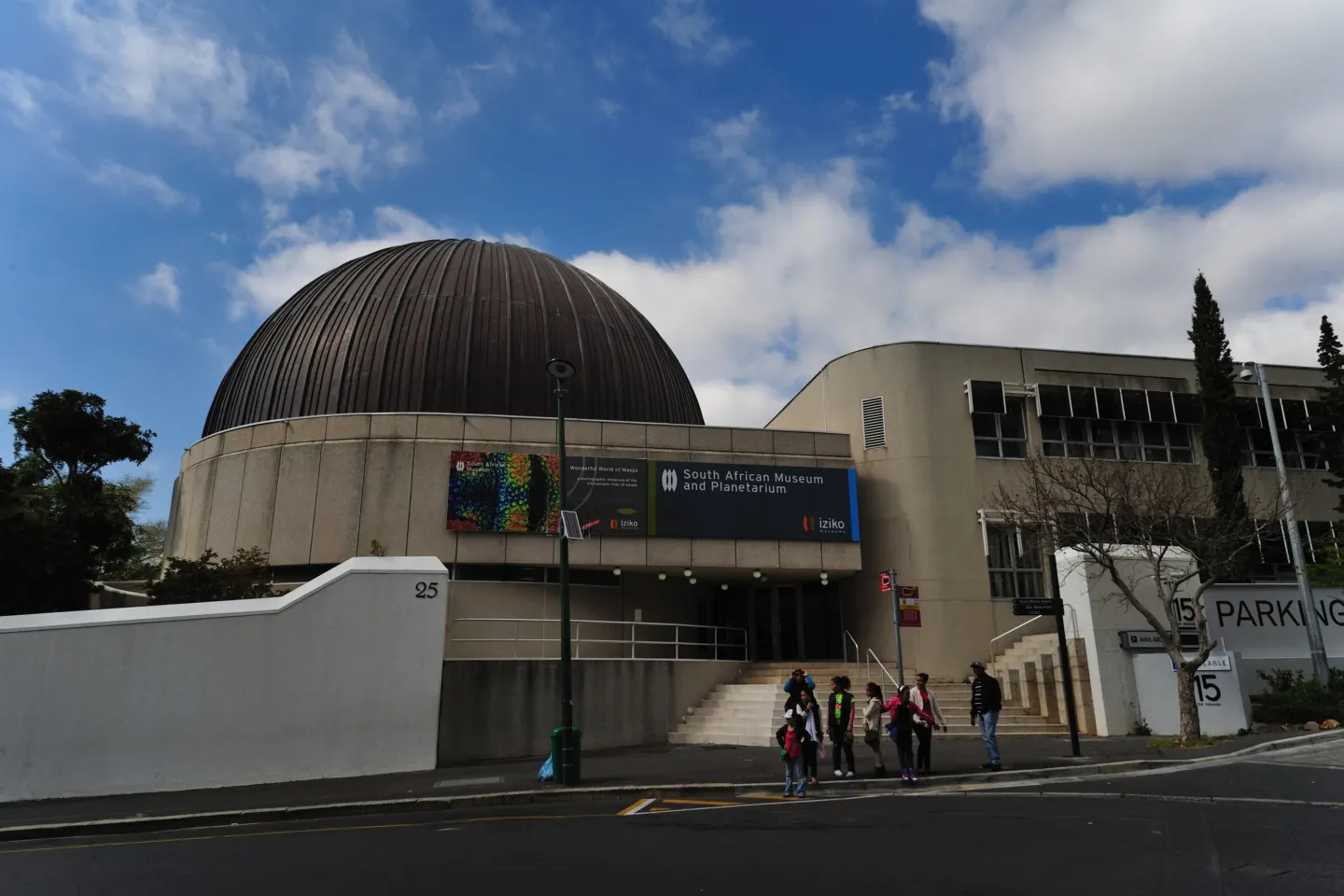
Coffins draped in the Namibian flag filled two rooms of the Iziko South African Museum in Cape Town on 19 August 2026. They held the remains of 84 people from what is now Namibia, kept in South African museum collections for more than 100 years. In a third room stood two more coffins, those of Namibian political prisoners who died in apartheid-era detention. All 86 were formally handed to a Namibian government delegation that day and flown home two days later.
The ceremony, reported and photographed by China’s Xinhua news agency, was led by South Africa’s minister of sport, arts and culture, Gayton McKenzie. It closed a process that both governments have presented as a matter of restoring dignity, not of moving museum objects.
How the remains came to be in a museum
The South African Museum belongs to Iziko Museums of South Africa. The chairperson of Iziko’s council, Marvin Mdhluli, said that the remains “entered the South African Museums as objects of race-based pseudo-scientific research”, research that set out to portray indigenous communities as inferior.
According to the Windhoek Observer, the 84 individuals came from several Namibian communities: Aawambo, Ovaherero, Ovahimba, Nama, Damara and San. Body casts and grave goods were returned with them, including beads, ostrich eggs and jewellery.
“Some of these ancestors were taken from their communities and became part of the colonial scientific and museum collections where they were treated as objects, rather as people,” Namibia’s minister of education, innovation, youth, sport, arts and culture, Sanet Steenkamp, said at the ceremony, in remarks reported by Xinhua.
Two prisoners of Robben Island
The other two coffins held Festus Nehale, who died in 1971, and Simon Petrus Niilenge, who died in 1974. Both had been held on Robben Island, the prison where anti-apartheid and other political prisoners were detained under apartheid. They were buried in Cape Town; the South African Heritage Resources Agency said the two men had been laid to rest in Gugulethu and Maitland cemeteries, from which their remains were exhumed.
A week before the handover, on 12 August, a Namibian delegation of family members, former political prisoners, traditional leaders and officials carried out rituals in Cape Town, the Namibia Economist reported, as part of the cultural and legal steps required before the remains could travel.
“They’ve never been free, but today they’re going home,” McKenzie said of the two men, as quoted by the Windhoek Observer. In a statement carried by Xinhua he said that keeping the remains of freedom fighters and ancestors far from home had been “an injustice to them, their families and their communities”.
Arrival in Namibia
The remains reached Namibia on 21 August, where President Netumbo Nandi-Ndaitwah received them. “The promise has been kept. Our nationals have returned to the warm soil of the country for whose freedom they gave their lives,” she said, according to the Windhoek Observer.
Steenkamp, who led the Namibian delegation in Cape Town, rejected the idea that the event was an administrative transfer. “We do not see this, as a country, as simply a transfer of remains and heritage materials from one country to another. To us … this is a homecoming,” the newspaper quoted her as saying.
The 84 ancestral remains were to stay temporarily in the care of Steenkamp’s ministry while consultations on their final resting place continued, the Windhoek Observer reported. The paper said the repatriation followed renewed cooperation between the two countries after a reunion of former prisoners on Robben Island in September 2025, which helped strengthen efforts to locate and return the remains.
Update
On 24 August 2026 President Netumbo Nandi-Ndaitwah led a ceremony at Heroes’ Acre in Windhoek marking the reinterment of eight liberation fighters, the Namibia Press Agency (NAMPA) reported. Namibian officials had said beforehand that Festus Nehale and Simon Petrus Niilenge would be reburied there on that date.
Sources
- South Africa returns ancestral remains to Namibia for colonial redress, healing
- A nation's dead finally come home: Namibia receives 86 remains from South Africa
- Rituals conducted in Cape Town as ancestral remains prepare to return home
- Namibia Repatriation
- Namibia reburries colonial-era martyrs and heroes at Heroes' Acre
Spotted an error? See how to request a correction.