From the archive Explainer
How tens of thousands crossed into Ceuta in a day, and what it set off in Europe
On 30 July 2026 more than 50,000 people entered the Spanish city of Ceuta from Morocco. Dozens died, most went back within two days, and Italy and Spain ended up checking each other's travellers.
- Event date
- Published
- Reading time
- 4 min
Key points
- More than 50,000 people entered Ceuta from Morocco on 30 July 2026; estimates run as high as 72,000.
- The official death toll on the Spanish side reached 72 by 2 August; Ceuta's president later spoke of about 100.
- Spanish authorities said more than 48,000 people returned to Morocco within 48 hours.
- Italy reintroduced checks on arrivals from Spain from 1 August, and Spain did the same for arrivals from Italy from 8 August.
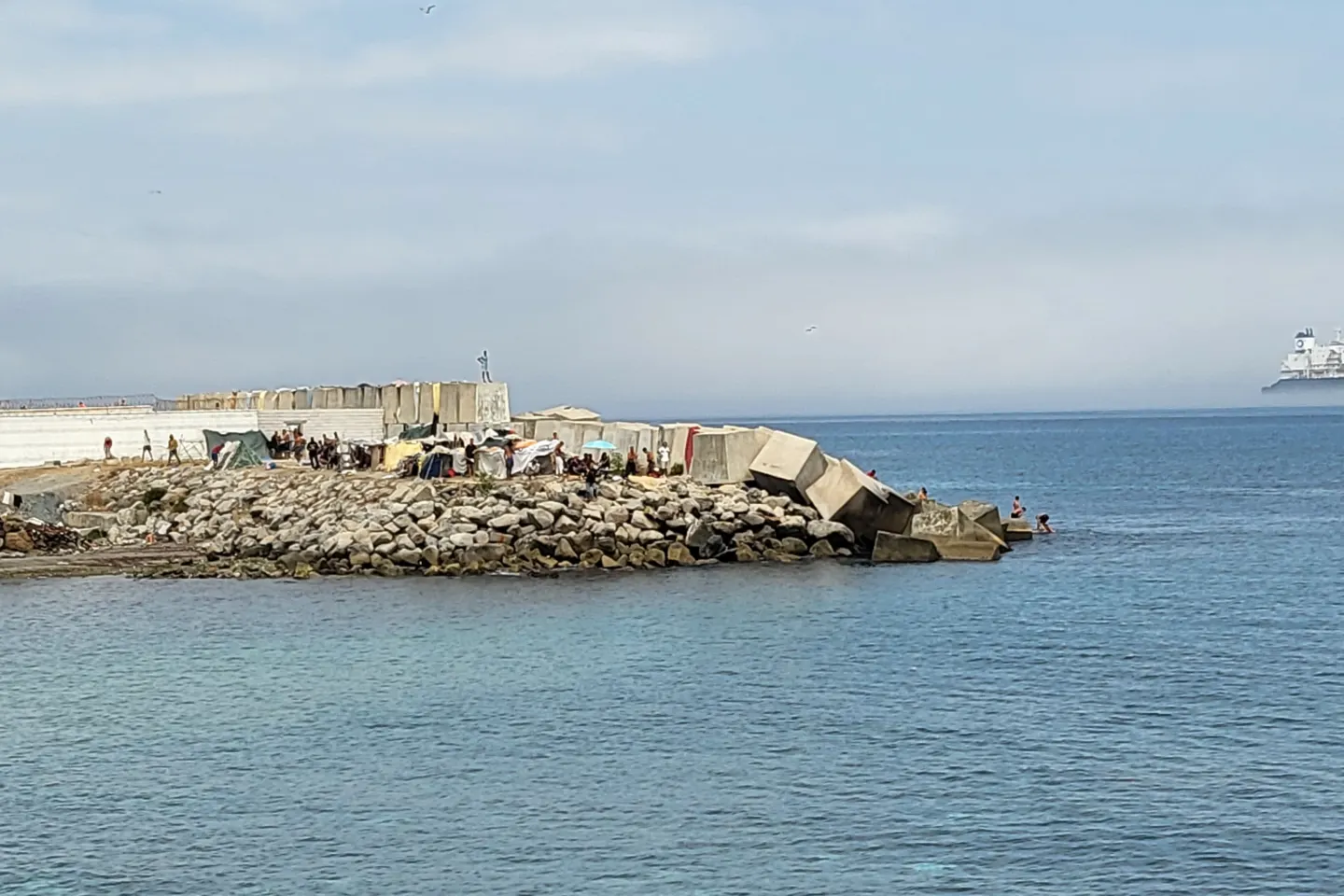
Ceuta is a Spanish city on the north coast of Africa, bordered by Morocco on one side and the sea on the other. With Melilla, further east, it forms the European Union’s only land frontier with Africa. On Thursday 30 July 2026 that frontier was overwhelmed: within hours, tens of thousands of people, most of them Moroccan and many of them young men, swam around the breakwaters or climbed the fence into the city.
How many people, and how many died
The figures have never been fully settled. Spain’s interior ministry spoke of roughly 50,000 entries, a number the Reuters news agency also used in the first days. Ceuta’s regional president, Juan Jesús Vivas, put it at around 60,000, and Reuters later cited 72,000 when describing Italy’s reasons for its border measures.
Most did not stay. The interior ministry said more than 37,500 had already returned to Morocco by the afternoon of Friday 31 July, and Spanish authorities said more than 48,000 had gone back within 48 hours. The Spanish news agency EFE, quoted by Turkey’s Anadolu Agency, reported that many left voluntarily once they understood they would not be able to obtain legal status in Spain.
The human cost rose day by day. Some people drowned; others were crushed as crowds tried to climb a breakwater and the border fence. By Sunday 2 August the official toll on the Spanish side stood at 72, after five more bodies were found along the coast, and more than 1,000 people had been treated by health services, according to the Spanish government’s representative in Ceuta, Miguel Ángel Pérez. On 6 August Vivas told a European Parliament meeting that about 100 people had died and that between 3,000 and 5,000 of those who crossed were still in the city, Reuters reported. Moroccan authorities were also recovering bodies from the sea, and no official figure from that side was available.
Why it happened then
Three explanations have been offered, and they are not mutually exclusive.
- A court ruling. On 8 July Spain’s Supreme Court confirmed that people who try to reach Spanish territory by swimming cannot be handed straight back to Morocco without an administrative procedure, the Catalan daily Ara reported. The practice, known in Spain as a hot return, remains permitted for people caught at the fence itself. The judges added that returns at sea could be allowed if containment barriers were placed in the water.
- Social media. Prime Minister Pedro Sánchez said smuggling networks had spread misleading versions of the ruling online. Some of those who crossed told CBS News they had seen posts saying “Spain is an open door”, though the broadcaster said it was not clear that the ruling itself prompted the surge.
- The date. 30 July is Throne Day, a national celebration in Morocco. Spanish intelligence documents released later show that online groups had urged people to take advantage of a day when security forces would be busy with festivities.
Morocco’s ambassador to Spain, Karima Benyaich, said the events happened against her government’s wishes.
How Spain responded
Sánchez travelled to Ceuta on 31 July and called the crossing “an attack” and “a violation of Spain’s territorial integrity”. He promised to use “all state resources” to restore normal life, sent army units, divers and maritime patrol vessels, and said the government would consider changing the law to make returns at the border more effective. On Saturday 1 August a 500-metre floating barrier was installed off the city; the Supreme Court had said that returns at sea could be lawful if containment elements were placed in the water.
Vivas called the situation “absolutely unsustainable” and said action had been taken too late and was insufficient.
The quarrel inside the Schengen area
The effects spread well beyond Ceuta. Italy’s prime minister, Giorgia Meloni, called for the Schengen agreement to be suspended, and from 1 August Italy reintroduced checks on arrivals from Spain by air and sea, saying they were aimed at non-EU nationals and would not affect Spanish or other EU citizens. Finland’s interior minister backed her. France ordered tighter controls on its Spanish border, and 22 EU member states signed a letter asking for coordinated action to protect the bloc’s external borders.
Spain retaliated. From 8 August it checked passengers on flights and ships from Italy, starting with 199 people on 12 flights on the first day, and said the controls would run until 7 September.
Schengen is the system that lets people travel between 29 European countries without passport checks. Its rules allow a member to bring back internal border controls temporarily on security grounds, and several countries have done so for years. What was new, Eleonora Testi of the European Council on Refugees and Exiles told Al Jazeera, was a country doing so because of arrivals in a state with which it shares no border. Davide Colombi, a researcher at the Centre for European Policy Studies, told the same outlet that no country can be expelled from Schengen and that “there is no realistic possibility for anybody from Ceuta to arrive in Italy.”
The European Commission made a similar point. Magnus Brunner, the commissioner for internal affairs and migration, said that special rules apply to Ceuta and Melilla, that people leaving the two cities for the rest of Spain are still checked, and that there had been “no onward movements towards the European continent or other Member States.”
Update
In early September the Spanish government declassified 40 security documents about the crisis, dated between 1 July and 1 August. They show that on 29 July the National Intelligence Centre (CNI) told the government's office in Ceuta and Civil Guard commanders, by message and in an 11-minute phone call, about online calls for a crossing by sea and land the next day, and sent a note to Moroccan intelligence, Ara and Euronews reported. The government said this was not a formal alert; Sánchez wrote on X that “no one could anticipate the migration crisis.” The opposition People's Party accused the government of lying. On 11 September Euronews reported that Gonzalo Sanz, chief of staff to the government's delegate in Ceuta, had resigned, although the delegate's office had not confirmed it officially. Sanz said he had passed the warning on the same day; the delegate, Miguel Ángel Pérez Triano, said he had not known of it and ruled out resigning.
Sources
- Spain to put containment fence around Ceuta after deadly border rush from Morocco
- Spain brands Ceuta migrant influx 'attack,' vows swift repatriations, full state response
- Death toll from migrant rush into Ceuta rises to 72
- 100 people died during Ceuta border rush, says Ceuta leader
- Spain checks 200 Italy arrivals in border controls after migration row
- Italy suspends free movement with Spain: Is Schengen in crisis after Ceuta?
- The Supreme Court confirms that hot returns of migrants arriving by sea cannot be made
- The CNI warned Morocco and the Spanish government on July 29 of mass calls to enter Ceuta
- Spanish official resigns as questions grow over intelligence warnings ahead of Ceuta migrant influx
Spotted an error? See how to request a correction.