From the archive Report
Gibraltar’s border fence with Spain comes down as EU–UK treaty takes effect
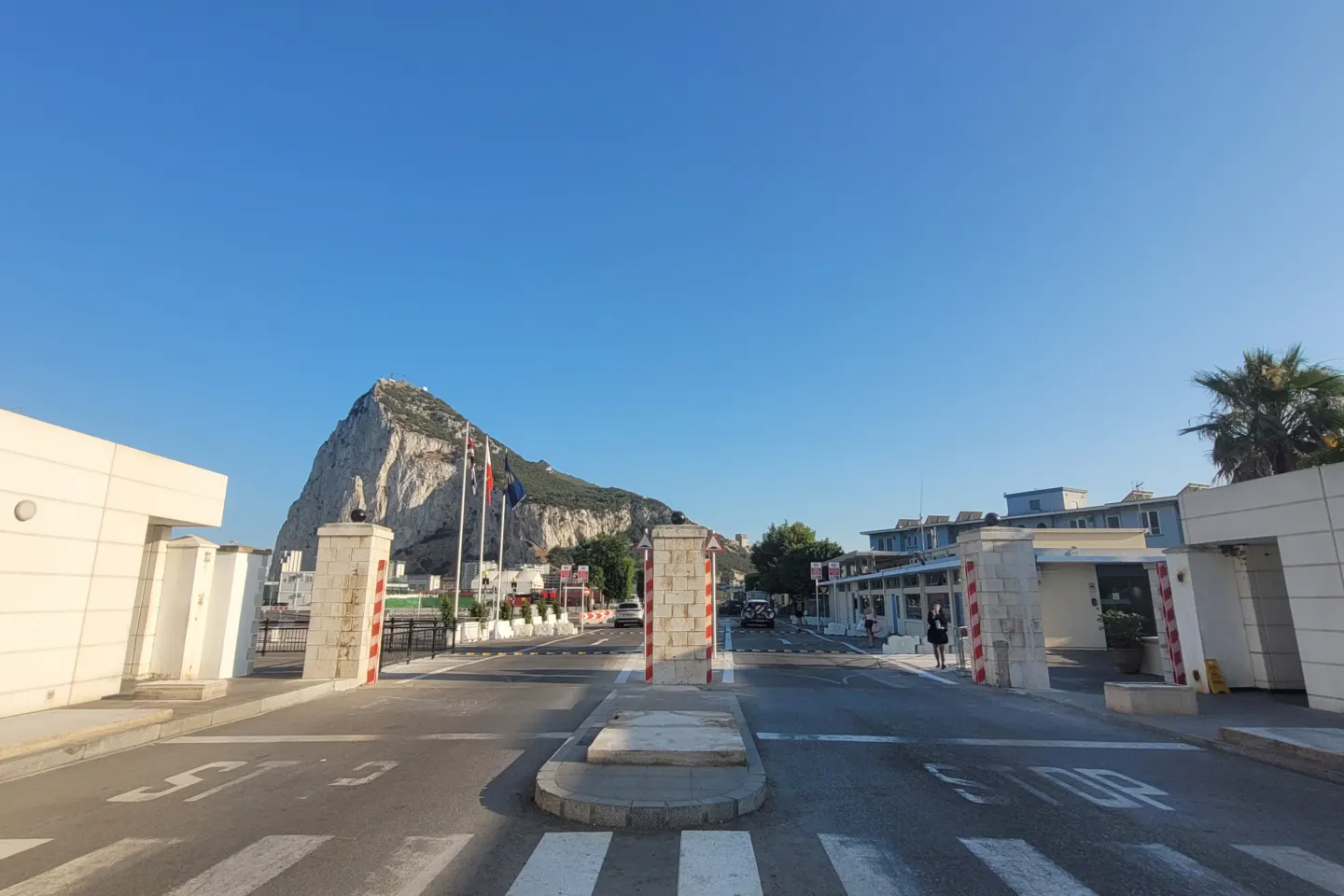
Routine checks at the land frontier ended just after midnight on 15 July 2026. Passport control moved to Gibraltar's airport and port, where Spanish officers now work beside local ones.
- Event date
- Published
- Reading time
- 3 min
Key points
- The EU–UK treaty on Gibraltar was signed in Brussels on 14 July 2026 and applied provisionally from 15 July.
- Checks at the land border ended; controls moved to Gibraltar's airport and port, with Spanish officers performing Schengen checks.
- About 15,000 people cross the frontier daily, according to the UK government.
- Sovereignty is untouched by the treaty, and European Parliament consent is still required.
A few minutes after midnight on Wednesday 15 July 2026, people began walking and driving between the Spanish town of La Línea de la Concepción and Gibraltar without showing a passport. The fence that had marked the frontier was gone, and a treaty signed in Brussels the previous day had started to apply.
The agreement between the European Union and the United Kingdom was signed on 14 July at the European Commission’s Berlaymont building by Stephen Doughty, the UK minister responsible for Europe and the Overseas Territories, and Maroš Šefčovič, the EU commissioner who led the talks. Gibraltar’s chief minister, Fabian Picardo, and Spain’s foreign minister, José Manuel Albares, attended. Gibraltar’s government said the signature concluded more than four years of negotiation between Gibraltar, the UK, the EU and Spain, and gave legal form to a political agreement the four had reached on 11 June 2025.
Gibraltar is a British overseas territory of about 38,000 people at the southern tip of the Iberian Peninsula. It was left out of the trade deal the UK and the EU struck after Brexit, which raised the prospect of a hard border. According to the UK government, about 15,000 people cross the land border every day, more than half of Gibraltar’s workforce. In the 2016 referendum, 96% of voters in Gibraltar backed remaining in the EU, the Associated Press reported.
What changed at the frontier
The treaty requires physical barriers at the land border to be removed. A legal analysis published by Dublin City University put the length of fencing to be dismantled at about 1.2 kilometres. Entry and exit checks now take place at Gibraltar’s airport and port instead: Gibraltar’s officers check arriving passengers first, and Spanish officers then carry out the checks required by the Schengen rules, in an arrangement the Associated Press compared to the paired controls at Eurostar stations in London and Paris.
News reports described the deal as bringing Gibraltar into the Schengen free-travel area. The legal position is narrower. The same university analysis notes that the treaty’s preamble says Gibraltar does not participate in the Schengen rules and is not associated with them; what the treaty does is allow people to move between Gibraltar and the Schengen countries without border checks. Travellers arriving from outside Schengen, including from the UK, go through the EU’s Entry/Exit System, which records photographs and fingerprints in place of passport stamps.
Goods are covered too. Customs duties and quotas between Gibraltar and the EU are removed, and Gibraltar, which has no value-added tax, introduces a transaction tax that starts at 15%, rises to 16% in the second year and is then aligned with the lowest standard VAT rate in the EU, currently 17%, according to the analysis.
Reactions on both sides
Crowds crossed in both directions soon after midnight, many in Spanish football shirts after Spain beat France in a World Cup semi-final on the Tuesday. “What you feel here is the brotherhood between the two people,” Picardo told the Spanish broadcaster RTVE. Šefčovič said: “It has taken four years of patient, complex negotiation, but the outcome speaks for itself.” In the UK government’s statement, Doughty said the agreement “delivers certainty for the people and businesses of Gibraltar”.
Gibraltar has added security of its own, including live facial recognition cameras at entry points. “The fortress has become a digital fortress now,” Picardo said.
What the treaty leaves open
The agreement does not settle who Gibraltar belongs to. Britain was ceded the territory in 1713 and Spain has maintained its claim ever since; the treaty states that it does not affect either side’s position on sovereignty. The UK government said British sovereignty and the independent operation of its military facilities were protected.
The treaty is being applied provisionally. For it to enter fully into force, the European Parliament must give its consent and the text must complete scrutiny in the UK Parliament. Either party may end the agreement with twelve months’ notice.
Sources
- UK finalises historic treaty with EU to secure economic future of Gibraltar
- UK and EU Sign Historic Treaty on Gibraltar's Future Relationship with the EU - 557/2026
- Gibraltar ushers in a new era as British territory's border fence with Spain is removed
- Gibraltar enters Schengen as border fence comes down under EU-UK treaty
- Has the Last Wall of Brexit Really Fallen? The Gibraltar Treaty Enters into Provisional Application
Spotted an error? See how to request a correction.